
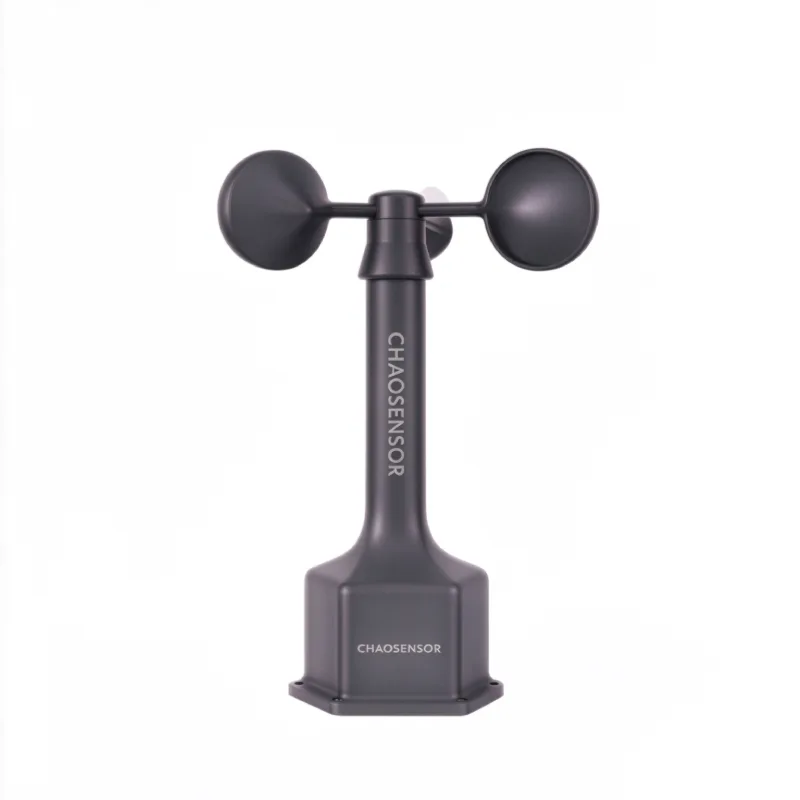
| Specification Parameter | Technical Details |
|---|---|
| Model / Series | CC-M50-S Heated 3-Cup Anemometer / Wind Speed Sensor (CC-M Series) |
| Measurement Principle | Infrared Photoelectric Rotary Chopper Disc with High-Dynamic-Response 3-Cup Rotor |
| Wind Speed Measurement & Performance Specifications | |
| Measurement Range | 0 to 65 m/s |
| Starting Threshold | < 0.5 m/s |
| Maximum Permissible Error (Accuracy) | ±0.5 m/s |
| Resolution | 0.1 m/s |
| Anti-Icing / Heating Function | Integrated Built-in Heater for Frost & Ice Prevention in Extreme Cold Environments |
| Electrical, Communication & Mechanical Configurations | |
| Output Signal & Interface | • Pulse Output: Opto-isolated Pulse Signal • Digital Interface: RS485 (Modbus-RTU) |
| Power Supply | 12 to 24 VDC |
| Operating Temperature | -60°C to +55°C |
| Storage Temperature | -60°C to +70°C |
| Housing & Cup Materials | • Main Body / Housing: Aluminum Alloy • Wind Cups: High-Strength Polycarbonate (PC) |
| Tailored OEM/ODM Capability | • Brand Customization: Custom silk-screen or laser-engraved logo branding available. • Packaging Options: Private-label custom protective packaging and calibration certificates. • Technical Adaptation: Customizable cable lengths, connector types, and communication protocols. |
| Applications | Wind power generation, alpine and polar meteorological stations, marine & port monitoring, aviation weather systems, smart agriculture, and industrial safety wind alarms. |
Product Overview
The CHAOSENSOR CC‑M50‑S Heated 3‑Cup Anemometer / Wind Speed Sensor belongs to CC‑M series wind‑monitoring instruments. It utilises opto‑electronic photoelectric coupling detection paired with high‑dynamic‑response three‑cup rotor, specially engineered for wind‑speed measurement under extremely cold, frost‑prone outdoor environments. Equipped with integrated built‑in anti‑icing heater, this heated cup‑style anemometer prevents frost‑ice accumulation and rotor seizure, enabling stable continuous observation down to ‑60°C operating temperature. Dual signal output options include opto‑isolated pulse signal and RS485 Modbus‑RTU digital interface, supporting seamless integration with meteorological data loggers, PLC, SCADA and industrial wind‑alarm systems. View our complete wind‑sensor portfolio at our wind speed and direction sensors page.
Core Working Principle
CC‑M50‑S Heated 3‑Cup Anemometer relies on opto‑electronic photoelectric coupling sensing technology. Incoming wind drives the high‑strength polycarbonate three‑cup rotor to rotate; internal photoelectric components capture rotor rotation frequency and convert it into corresponding wind‑speed value. The integrated heating module actively melts frost and ice on moving components in frigid conditions to avoid mechanical lock‑up. Measured results can be transmitted via opto‑isolated pulse signal for simple acquisition systems or RS485 Modbus‑RTU digital bus for advanced meteorological monitoring platforms.
Key Features & Engineering Advantages
- Wide‑Range Wind‑Speed Performance: Measuring range 0‑65 m/s; starting threshold below 0.5 m/s; resolution 0.1 m/s; maximum permissible error ±0.5 m/s, capturing light breeze up to destructive gusts.
- Built‑In Anti‑Icing Heater: Integrated heating function prevents frost and ice build‑up on rotor assemblies, solving sensor‑locking risks for alpine, polar and high‑altitude cold‑climate deployment.
- Dual‑Mode Signal Output: Opto‑isolated pulse output for legacy simple‑logger setups plus RS485 Modbus‑RTU digital interface for modern industrial‑IoT and meteorological networks.
- Extreme‑Temperature Adaptability: Operating temperature: ‑60 °C ~ +55 °C; storage temperature: ‑60 °C ~ +70 °C, fits polar‑region, high‑mountain and severe‑cold field stations.
- Durable Mechanical Build: Robust aluminum‑alloy main housing; high‑strength polycarbonate (PC) wind cups delivering good weather‑resistance for long‑term outdoor unattended work.
- Universal Industrial Power: 12‑24 VDC wide‑voltage power supply, compatible with solar‑battery off‑grid power and site mains‑power conversion units for remote locations.
- Full OEM / ODM Customization: Custom silk‑screen / laser‑engraved logo branding, private‑label protective packaging & calibration certificates; customizable cable lengths, connector styles and communication protocols for tender‑grade bulk‑project orders.
Sensor Selection Guide: Heated vs Non‑Heated Wind‑Speed Sensors
CHAOSensor supplies multiple mechanical and ultrasonic wind sensors for different climate‑zone requirements:
- CC‑M50‑S Heated 3‑Cup Anemometer: Photoelectric 3‑cup wind‑speed‑only sensor with integrated anti‑ice heater. Primary pick for sites suffering frequent frost, snow and extreme low‑temperature down to ‑60 °C, such as alpine meteorological stations, cold‑climate wind farms, polar observation bases and frigid‑zone ports.
- Standard non‑heated cup‑type anemometers: Cost‑optimized solution for temperate‑zone projects without icing risk, not suitable for long‑term sub‑zero frost‑prone sites.
- Ultrasonic wind sensors: Zero‑moving‑parts; most standard ultrasonic units lack heavy‑duty anti‑icing capacity for ‑60 °C extreme‑cold scenarios.
Select CC‑M50‑S when your monitoring location faces persistent freezing‑cold conditions and you need reliable ice‑resistant wind‑speed acquisition. Pair it with wind‑direction sensors or other meteorological instruments from wind speed and direction sensors page to assemble a complete weather‑monitoring station.
Typical Industrial Applications
- Wind‑Power Generation: Cold‑climate on‑shore wind‑farm wind‑speed monitoring for turbine safety interlock and wind‑resource evaluation.
- Alpine & Polar Meteorological Stations: Long‑term unattended wind observation for high‑altitude mountain‑zone and polar‑region research observation networks.
- Marine & Port Monitoring: Cold‑coastal and northern‑harbour wind‑speed monitoring for vessel navigation safety and harbour weather‑alert systems.
- Aviation Weather Systems: Airport wind monitoring for cold‑frost‑prone airport runway safety warning workflows.
- Smart Agriculture: Cold‑region farm and greenhouse wind‑condition monitoring supporting crop‑protection and frost‑risk assessment.
- Industrial Safety Wind Alarms: Wind‑speed early‑warning for tower‑cranes, outdoor heavy‑industry facilities operating in freezing environments.
Installation & Field‑Deployment Guidelines
- Mounting Location: Install on open unobstructed meteorological mast; stay clear of buildings, trees and towers that produce wind‑shadow airflow distortion.
- Mount Posture: Keep sensor upright and level, guaranteeing free rotation of three‑cup rotor for authentic wind‑speed sampling.
- Power & Wiring: Apply 12‑24 VDC power input; use shielded cable for RS485 Modbus‑RTU wiring to suppress field electromagnetic interference.
- Heater Power Budget: When heater activates under low‑temperature conditions, ensure power‑supply capacity meets heating‑load requirement to avoid under‑voltage malfunction.
- Routine Inspection & Maintenance: Periodically examine wind‑cup assemblies; gently clear snow, ice fragments and foreign debris to keep rotor rotating smoothly, avoid scratching PC cup surfaces.
- Surge‑Protection Recommendation: Fit lightning surge‑protection hardware for power‑supply and communication lines at thunder‑prone outdoor sites to protect sensor and backend data‑acquisition equipment.
Frequently Asked Questions (FAQ)
1. What is the operating‑temperature range for CC‑M50‑S heated 3‑cup anemometer?
Operating temperature ranges from ‑60 °C to +55 °C; storage temperature spans ‑60 °C ~ +70 °C. Built‑in heater prevents frost‑ice formation for extreme‑cold‑site deployment.
2. What output signals are available for CC‑M50‑S?
Dual outputs: opto‑isolated pulse signal and RS485 Modbus‑RTU digital interface, compatible with most meteorological loggers and industrial‑control hardware.
3. What wind‑speed‑specifications does CC‑M50‑S achieve?
Measurement range: 0‑65 m/s; starting threshold <0.5 m/s; resolution 0.1 m/s; maximum permissible error ±0.5 m/s.
4. What materials constitute the sensor housing and wind‑cups?
Main‑body housing is aluminum‑alloy; wind‑cups adopt high‑strength polycarbonate (PC) material for outdoor weather‑resistant performance.
5. Can I get custom‑configured versions for project requirements?
Yes. OEM / ODM services cover custom logo marking, private‑label calibration‑certificate & packaging, custom cable‑lengths, connectors and communication‑protocol adaptation. You may combine it with supplementary wind‑monitoring devices found on our wind speed and direction sensors page to build full‑scale meteorological‑observation systems.