
Applications
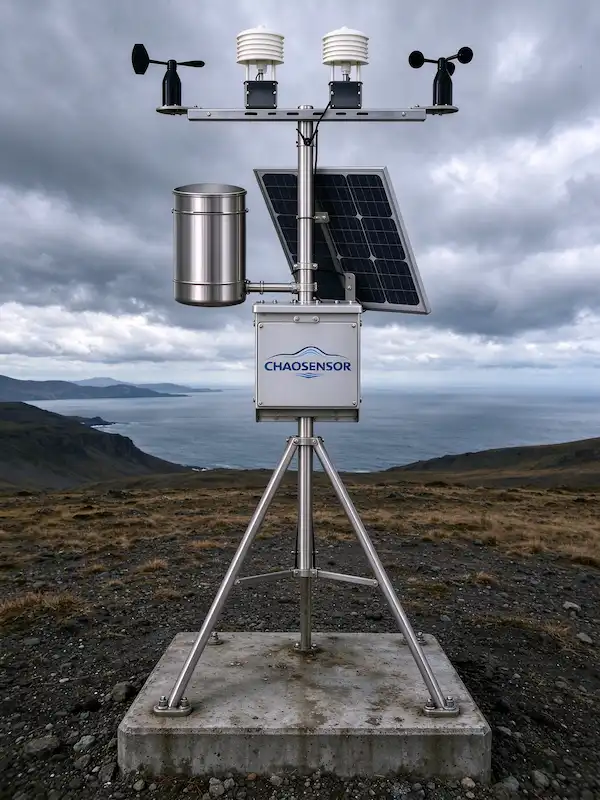
Meteorological Weather Monitoring & IIoT Cloud Platform
Building specialized high-reliability telemetries with the comprehensive CHAOSENSOR meteorological hardware network seamlessly integrated with our native IIoT Cloud Platform. For precise ambient climate capture, our core atmospheric lines deploy standalone air temperature, relative humidity, and barometric pressure sensor matrices—featuring the premium CC-M01, CC-M02, CC-M25, CC-M26, and CC-M90 configurations natively protected by our multi-plate radiation shield network, including the standard CC-M22 (6 to 12 layers selectable), the compact CC-M23, and the streamlined D110mm 5-layer CC-M24-S and CC-M24 shelters. Utility-scale automated weather logging is driven by our Flagship Ultrasonic Integration Series, spanning the CC-M91 4-in-1, CC-M92 5-in-1, CC-M03 12-in-1 (tracking PM2.5/PM10/CO/NO2/SO2/O3), CC-M03-1 9-in-1 (with UV sensor), CC-M03-2, CC-M03-3, CC-M04/M04-1 (with tipping bucket mechanisms), CC-M05-1/M05-2, CC-M71, CC-M72, CC-M73, CC-M76, and the ultra-rugged CC-M400-1 to CC-M400-4 and CC-M81/M82/M83 compact weather stations. For dedicated wind vectors, the system deploys the premium CC-M70 and CC-M05/M06/M08 ultrasonic wind sensors alongside an exhaustive line of mechanical cup and vane devices, featuring high-strength polycarbonate housings (CC-M13/M14, CC-M13-B/M14-B), heavy-duty aluminum alloys (CC-M13-C/M14-C, CC-M13-A/M14-A), the CC-M15-A/B/C combined wind trackers with zirconia ceramic bearings, and the CC-M16 Mechanical Wind Speed Alarm System with intelligent sound and light controllers. Precipitation analytics are securely captured via dual-material tipping bucket systems, highlighting the industrial CC-M20 Stainless Steel Rain Gauge and the cost-effective CC-M19 Polycarbonate PC Rain Gauge, fortified by the advanced CC-M17 Radar Rain, Snow, and Hail Precipitation Sensor, the CC-M18 Rain & Snow Detection Sensor with a 15° surface bracket, and the high-precision CC-M-WPG Weighing Precipitation Gauge meeting WMO No.8 standards for dynamic wind compensation. Extreme thermal microclimates are audited via the industrial CC-M-WBGT Black Globe Temperature Sensor for wet-bulb globe temperature heat stress mapping. All edge parameters are instantly backhauled via RS485 Modbus-RTU or SDI-12 to the CHAOSENSOR IIoT Cloud Platform for real-time remote dashboards, historical analytics, and compliance data forwarding.
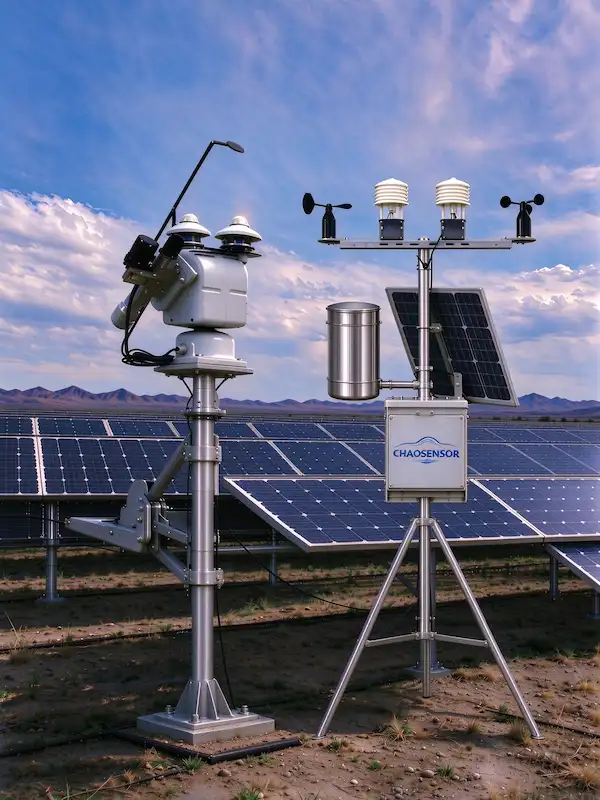
Solar PV Monitoring Sensors
Maximizing utility‑scale solar power grid efficiency and tracking localized panel degradation using the comprehensive CHAOSENSOR solar PV environmental monitoring matrix, seamlessly linked to our native IIoT Cloud Platform. This field‑proven hardware ecosystem deploys the flagship CC‑M200 14‑in‑1 Flagship Weather Station and the CC‑M100 7‑in‑1 Standard Solar Station to secure uninterrupted microclimate telemetry. Solar radiometers follow the global ISO 9060 standard, which carries two generations of naming rules. Under the older ISO 9060:1990 scheme, instruments were labelled secondary standard, first‑class and second‑class; the updated ISO 9060:2018 rebrands these tiers as Class A, Class B and Class C, with optional “spectrally flat” and “fast response” markers for premium units. CHAOSENSOR supplies radiometers across the full Class A / B / C portfolio and maintains our own in‑house calibration laboratory to guarantee traceable, accurate metrology for every unit leaving the factory. Class A delivers the tightest tolerances for spectral error, directional response, temperature drift and long‑term stability, reserved for scientific reference, BSRN meteorological stations and high‑stakes PV performance validation; Class B suits reliable regional monitoring networks and routine performance audits; Class C offers economical, dependable readings for general weather stations and low‑cost distributed solar deployments. Two core operating principles dominate our portfolio. Thermopile radiometers such as our CC‑S05 absorb full‑spectrum sunlight on a black receiver disc, converting radiant energy into heat; the temperature delta across stacked thermocouple junctions generates a voltage proportional to irradiance, covering the complete solar band roughly 280–2800 nm with excellent spectral flatness. Silicon radiation sensors like the CC‑S01 rely on photodiode transduction, responding to visible and near‑infrared bands to match the absorption profile of photovoltaic cells, ideal for fast, cost‑effective PV side‑by‑side comparison rather than absolute broadband reference measurement. The CC‑S12 Pyrheliometer, by contrast, is a direct‑normal radiometer with a narrow field of view, capturing only collimated sunlight along the sun’s axis for DNI resource assessment in concentrating solar and high‑precision irradiation modelling. Across all variants, solar radiometers quantify incident radiant flux to calibrate expected power yield, flag soiling‑related losses, validate performance ratio, and build long‑term solar resource datasets for greenfield site prospecting. Our suite also includes the CC‑S11 albedo sensor, CC‑S04 sunshine duration sensor, high‑precision CC‑S10 automatic sun tracker, CC‑S08 back‑of‑module temperature sensors, CC‑S‑ASI all‑sky imager and CC‑S07 optical PV soiling monitoring system for irradiance logging, cloud forecasting and yield‑loss monitoring. All edge data streams are instantly backhauled via RS485 Modbus‑RTU / USB to the CHAOSENSOR IIoT Cloud Platform for real‑time remote dashboards, performance ratio (PR) mapping, and historical analytics.
Applications: Utility‑scale PV power stations, distributed solar sites, pre‑construction solar resource assessment, independent PV performance ratio verification, meteorological radiation observation, concentrating solar facilities, agrivoltaic projects and academic solar radiation research.
Selection: Class A radiometers for reference‑grade scientific and BSRN station deployment; Class B for routine solar monitoring and performance auditing; Class C for economical distributed PV and general meteorology; CC‑S10 automatic sun tracker paired with CC‑S12 pyrheliometer for DNI measurement; CC‑S‑ASI all‑sky imager for cloud and generation forecasting; CC‑S07 soiling sensor to quantify dust‑driven yield loss; CC‑S08 back‑module temperature sensor for thermal correction of PV output.

Intelligent Agriculture & Agritech Environmental Monitoring
Optimizing commercial greenhouse climate control, precision open-field irrigation, and advanced closed-loop hydroponic reservoirs using the comprehensive CHAOSENSOR agritech hardware matrix, seamlessly paired with our native IIoT Cloud Platform. For multi-depth ground asset profiling, this field-proven portfolio deploys a rugged sub-surface series, spanning from basic CC-A04 Soil Temp/Moisture probes and CC-A05 3-in-1 parameters to the multi-functional CC-A15 and CC-A09 Soil Moisture/Temperature/EC/pH/NPK Nutrient Sensors—all constructed via 100% high-density black epoxy resin vacuum filling shields to prevent corrosion from heavy fertilizer, salinity, or alkalis. Specialized soil hydrology research is empowered by the premium CC-A26 Time Domain Reflectometry (TDR) and CC-A27 Frequency Domain Reflectometry (FDR) Soil Sensors with 316L stainless steel needles, alongside the CC-A17 Soil Heat Flux Sensor, CC-A18 Soil Water Potential Sensor, CC-A24 Electrochemistry Core Soil pH Probe, and CC-A25 Frequency Conversion AC Soil EC Sensor. Plant microphysiological traits are strictly audited via the CC-A16 High-Precision Plant Dendrometer Sensor for seamless micro-swelling capture, the CC-A11 Biomimetic Dielectric Leaf Wetness & Temperature Sensor, and the CC-A03 Anodized Aluminum Illuminance Sensor (0-200K Lux). For smart greenhouse water automation and nutrient solution dosing loops, the system integrates industrial Multi-Parameter Water Quality Sensors to monitor real-time pH, EC, DO, and liquid temperature. All agronomic edge data streams are backhauled via RS485 Modbus-RTU to the CHAOSENSOR IIoT Cloud Platform for real-time remote dashboards, smart irrigation solenoid valve triggers, and predictive crop analytics.
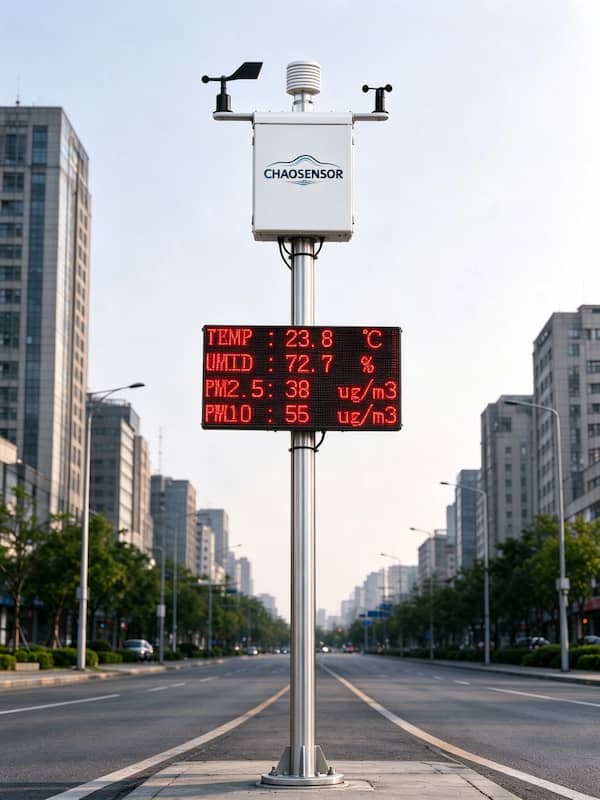
Smart City, Intelligent Transportation & Ambient Sensing Networks
Empowering municipality grid deployments, intelligent transportation systems (ITS), and critical highway weather safety frameworks using the high-density CHAOSENSOR environmental air quality and transportation sensing matrix, seamlessly unified with our native IIoT Cloud Platform. For bridge, tunnel, and highway road safety logistics, this portfolio deploys a remote non-contact rugged series, featuring the CC-M-VSB Forward Scatter Visibility Sensor with hard-anodized aluminum and auto-heating optics to combat dense fog, the CC-M-R01 Remote Road Surface State Sensor for real-time water/ice/snow film and grip detection, and the CC-M35 Ultrasonic Snow Depth Sensor. Urban grid monitoring is secured via our modular CC-E-AQM Pump-Suction Air Quality Monitoring Station, the CC-E01 Laser Particulate Matter Monitors for PM2.5/PM10/TSP tracking, and the CC-E03/E04 Sound Level Noise Sensors compliant with IEC 61672 Class 2 standards. Plant building mechanics and factory HVAC automation are strictly managed via our CC-E10 Industrial Micro Differential Pressure Sensor and duct-mount transmitters (CC-E05/E06/E07). All environmental and road telemetry metrics are backhauled via RS485 Modbus-RTU to the CHAOSENSOR IIoT Cloud Platform for automated threshold hazard alerts, road pollution heatmapping, and real-time visualization on the CC-E-SCREEN LED Display Terminal.
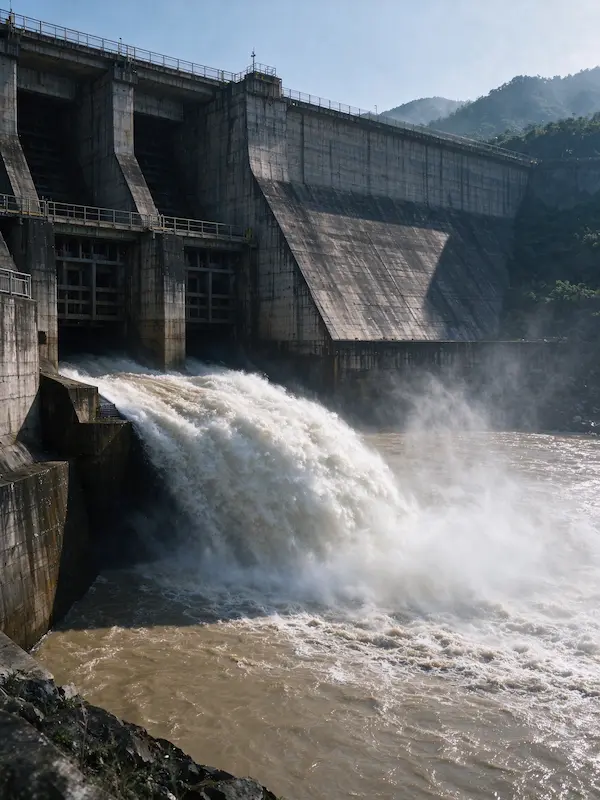
Water Level & Open Channel Flow Monitoring
CHAOSENSOR water level and open channel flow monitoring solutions support hydrological telemetry, flood warning, urban drainage and irrigation management. The portfolio includes CC‑WF500 high‑precision non‑contact radar flowmeter applying Doppler radar principle to compute real‑time open‑channel discharge by combining surface velocity and water‑level data; CC‑WV500 industrial non‑contact radar velocity meter for independent surface flow velocity acquisition; CC‑WL03 submersible liquid level sensor adopting hydrostatic pressure principle for submerged installation in tanks and boreholes; CC‑WL01 ultrasonic liquid level sensor using acoustic time‑of‑flight echo for cost‑effective non‑contact clean‑water measurement; CC‑WL04, CC‑WL05, CC‑WL06 80GHz FMCW radar level sensors delivering anti‑interference non‑contact detection for harsh sites with foam, vapour and floating debris; CC‑WM100 industrial RS485 direct‑reading water meter for pipeline cumulative water consumption statistics, seamlessly paired with our native IIoT Cloud Platform for remote monitoring and configurable alarm management.
Applications: River and reservoir hydrological observation, flood early‑warning systems, urban drainage and storm‑water overflow monitoring, agricultural irrigation canal open‑channel flow metering, industrial tank and wastewater treatment plant liquid‑level tracking, mine sump monitoring, as well as municipal water‑supply pipeline water‑resource statistical analysis.
Selection: CC‑WF500 for full open‑channel flow; CC‑WV500 for surface velocity; CC‑WL03 for submerged level measurement; CC‑WL01 for clean‑water non‑contact projects; CC‑WL04 / CC‑WL05 / CC‑WL06 for harsh‑condition level measurement; CC‑WM100 for pipeline flow statistics.
Water Quality Sensors
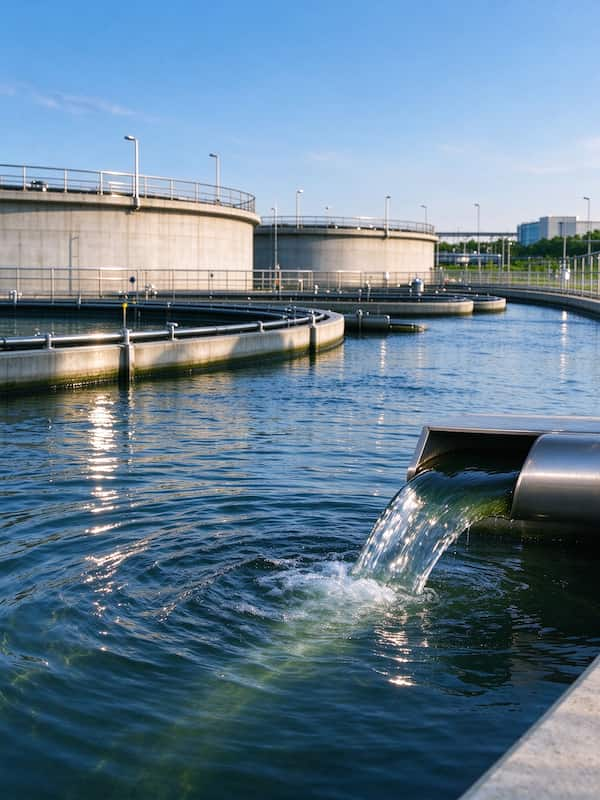
CHAOSENSOR water quality monitoring portfolio delivers industrial electrochemical and optical submerged probes for continuous aquatic measurement, seamlessly paired with our native IIoT Cloud Platform for remote telemetry, data logging and configurable alarm management. The lineup includes CC‑W01, CC‑W02 and CC‑W02‑B multi‑parameter probes integrating multiple water quality parameters for in‑situ profiling; CC‑W04‑A/B/C pH sensors adopting potentiometric principle to detect hydrogen ion concentration; CC‑W11 series conductivity sensors measuring electrical conductivity, salinity and TDS, with CC‑W11‑F toroidal conductivity for heavily polluted wastewater; CC‑W05‑A~E optical dissolved oxygen sensors using luminescence quenching for low‑maintenance oxygen detection; CC‑W06‑A~D turbidity sensors for water cloudiness measurement; CC‑W07‑A~D TSS sensors quantifying total suspended solids; CC‑W08 residual chlorine sensor for disinfection residue tracking; CC‑W09‑A/B ORP sensors for oxidation‑reduction potential; CC‑W10 ammonia nitrogen sensor for eutrophication indicator monitoring; CC‑W16 dissolved ozone sensor for disinfection process control; CC‑W17 blue‑green algae and CC‑W18 chlorophyll‑a optical sensors for algal bloom early warning; CC‑W03 salinity sensor for brackish and marine water; CC‑W20 ion‑selective sensors for targeted detection of nitrate, nitrite, ammonium, chloride, fluoride, potassium, sodium and calcium ions.
Applications: River, lake, reservoir and estuary ecological monitoring and eutrophication early warning, freshwater and marine aquaculture, municipal wastewater treatment process monitoring and discharge compliance, drinking water plant quality surveillance, industrial effluent online monitoring, coastal marine environmental observation, as well as urban stormwater and combined sewer overflow monitoring.
Selection: CC‑W01 / CC‑W02 / CC‑W02‑B for multi‑parameter in‑situ profiling; CC‑W04 series for pH; CC‑W11 series for conductivity and salinity; CC‑W05 for optical dissolved oxygen; CC‑W06 for turbidity; CC‑W07 for TSS; CC‑W08 for residual chlorine; CC‑W09 for ORP; CC‑W10 for ammonia nitrogen; CC‑W16 for dissolved ozone; CC‑W17 for blue‑green algae; CC‑W18 for chlorophyll‑a; CC‑W03 for standalone salinity; CC‑W20 for selective ion measurement.