
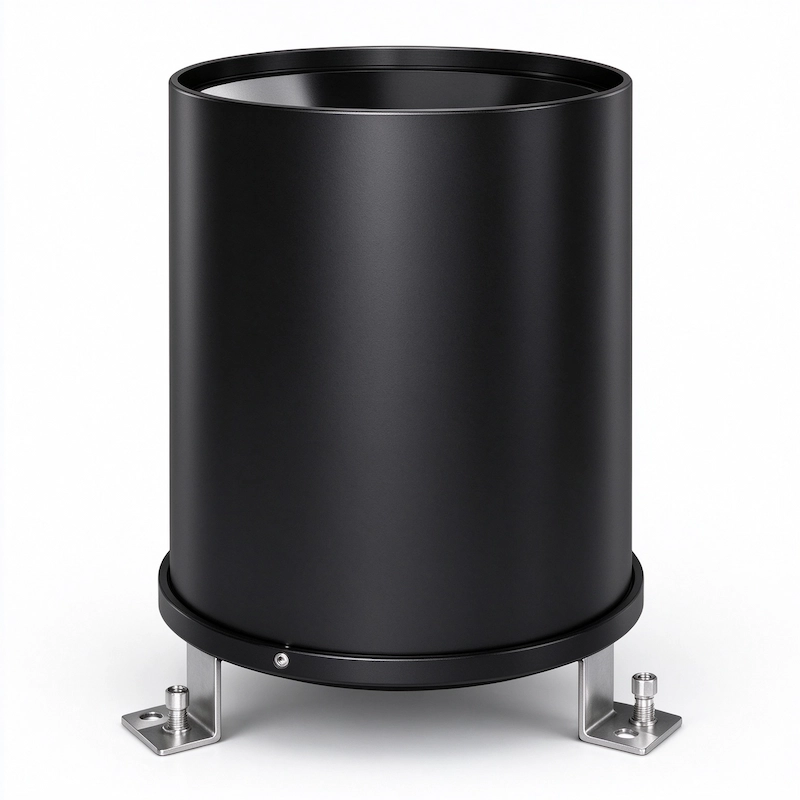
| Specification Parameter | Technical Details |
|---|---|
| Model / Series | CC‑M19 Tipping Bucket Rain Gauge (CC‑M Series) |
| Compliance Standard | WMO‑No.8 (World Meteorological Organization Guide to Instruments and Methods of Observation) |
| Rainfall: Measurement Core Matrix | |
| Measurement Principle | Single‑Stage Dual‑Chamber Tipping Bucket with Magnetic Hermetically‑sealed Reed Switch |
| Collector Orifice | Ø 200 mm (314 cm² collection area), 40°‑45° acute‑angle rim |
| Resolution | 0.2 mm per tip (Standard); Optional: 0.1 mm / 0.5 mm (factory‑configured) |
| Measurement Intensity Range | 0.01‑4.0 mm/min (Max admitted intensity: 8.0 mm/min) |
| Measurement Accuracy | ≤±3% (tested against reference collector across stated intensity range) |
| Signal Output Interface Matrix | |
| Output Signal Configuration | • Pulse Output: Dry‑contact reed switch, polarity‑free, 1 pulse per tip • RS‑485: Modbus‑RTU, 9600 bps, 8‑N‑1, default slave ID 0x01 • 4‑20 mA Current Loop: Daily accumulated rainfall 0‑50 / 0‑100 / 0‑200 mm • Analog Voltage: 0‑2 V / 0‑5 V / 0‑10 V (Daily accumulated rainfall 0‑50 / 0‑100 / 0‑200 mm) |
| Power Supply Voltage | • Pulse: Passive, no external power required • RS‑485 / 0‑2 V Analog: 5‑24 VDC • 4‑20 mA / 0‑5 V / 0‑10 V: 12‑24 VDC (≥15 VDC recommended for 0‑10 V full‑scale output) |
| Mechanical & Environmental Matrix | |
| Operating Temperature | -10 °C ~ +70 °C |
| Operating Humidity | 0‑100 %RH (Non‑condensing) |
| Housing Material | UV‑stabilized injection‑molded Polycarbonate (PC) / ABS engineering plastic |
| Strainer Material | Removable Stainless steel mesh debris strainer |
| Ingress Protection | IP65 |
| Dimensions | Orifice Ø200 mm; Body Ø208 mm; Base Flange Ø217 mm; Height 220 mm; 238 mm across mounting lugs |
| Leveling & Mounting | Integrated circular spirit level; 3 adjustable leveling feet; two mounting lugs (Ø12 mm mounting holes) |
| Standard Cable | • Pulse: 2‑core shielded cable • Analog(Voltage / 4‑20 mA): 3‑core shielded cable • RS‑485: 4‑core shielded cable • Standard length: 3 m, custom lengths upon request |
| System & Application Configurations | |
| Tailored OEM/ODM Capability | • Range Customization: Optional tipping resolution (0.1 mm /0.5 mm), analog full‑scale rainfall range selection • Cable Customization: Custom cable length available • Technical Adaptation: Modbus slave address configurable, multiple industrial signal output options for logger / PLC integration |
| Applications | Unattended precipitation monitoring for meteorological stations, hydrological networks, flood‑control early‑warning systems, smart agriculture and agrometeorological monitoring stations. |
CC‑M19 Tipping Bucket Rain Gauge – WMO‑Compliant Outdoor Precipitation Monitoring Sensor
The CC‑M19 tipping bucket rain gauge belongs to CHAOSENSOR CC‑M series professional precipitation instruments, fully complying with WMO‑No.8 meteorological observation guidelines for unattended continuous rainfall measurement in outdoor harsh environments. As one core unit within our meteorological‑sensors portfolio, this tipping bucket rainfall sensor delivers stable and repeatable rainfall depth and rainfall‑intensity data for meteorological stations, hydrological networks, flood‑warning infrastructure and smart‑agriculture monitoring projects.
Working Principle of CC‑M19 Tipping Bucket Rain Gauge
Rainfall passes through Ø200 mm sharp‑edged collector orifice (314 cm² catchment area) and enters the funnel assembly. A removable stainless‑steel mesh strainer filters leaves, insects and grit to avoid internal clogging. Rainwater flows into one chamber of factory‑calibrated dual‑chamber tipping‑bucket mechanism. Once accumulated rain reaches preset resolution volume (0.2 mm standard), gravity shifts the balance, triggering bucket tipping & emptying. A permanent magnet mounted on pivot beam triggers hermetically‑sealed reed‑switch and outputs one measurement pulse for each tipping event; meanwhile the second bucket moves under funnel to keep continuous measurement without dead‑time gap.
Core Technical Advantages
- WMO‑No.8 Standard Compliance: 40‑45° acute‑angle rim design minimizes rain splash‑out and droplet retention for internationally‑accepted catch accuracy.
- Selectable Measurement Resolution: Standard 0.2 mm / factory‑optional 0.1 mm or 0.5 mm tipping resolution for different monitoring‑accuracy requirements.
- Wide Rain‑Intensity Adaptability: Valid intensity range 0.01‑4.0 mm/min; maximum admitted intensity up to 8.0 mm/min; overall accuracy ≤ ±3% across working range.
- Four Industrial Output Modes: Dry‑contact Pulse, RS‑485 Modbus‑RTU, 4‑20 mA current‑loop, 0‑2 V / 0‑5 V /0‑10 V analog voltage for logger / RTU / PLC integration.
- All‑Weather Outdoor Build: UV‑stabilized PC/ABS housing with IP65 ingress‑protection; integrated bubble spirit‑level plus three fine‑adjust leveling feet for WMO‑required horizontal installation.
- Rich Modbus Register Data: RS‑485 version provides today rainfall, yesterday rainfall, hourly rainfall, total cumulative rainfall, 24‑hour max/min rainfall and built‑in RTC real‑time clock.
Signal Output Introduction
- Dry‑Contact Pulse Output: Passive polarity‑free reed‑switch signal, no external power needed; each tipping generates one pulse. Host logger counts pulse number and multiplies by resolution value to get rainfall depth. Requires ≥1 ms software debounce on data acquisition side.
- RS‑485 Modbus‑RTU Output: 9600 bps, 8‑N‑1, default slave ID 0x01. Direct digital reading of multiple rainfall‑related registers without manual pulse counting; supports RTC time synchronization and counter reset command.
- 4‑20 mA Current‑Loop: Live‑zero design for daily accumulated rainfall (auto‑reset at midnight); selectable full‑scale:0‑50 mm /0‑100 mm /0‑200 mm; below 3.5 mA indicates cable‑fault diagnostic signal, suitable for long‑distance field wiring.
- Analog Voltage Output (0‑2 V /0‑5 V /0‑10 V): Analog value corresponds to daily cumulative rainfall, auto reset at 00:00 midnight. 0‑10 V variant needs ≥15 VDC power‑supply for full‑range output performance.
Mechanical & Environmental Specifications
- Collector Orifice: Ø200 mm (314 cm² collection area)
- Operating Temperature: ‑10 °C ~ +70 °C
- Operating Humidity: 0‑100 %RH (Non‑condensing)
- Ingress Protection Grade: IP65
- Overall Dimension: Orifice Ø200 mm, body Ø208 mm, base flange Ø217 mm, height 220 mm; mounting‑lug span 238 mm with Ø12 mm mounting holes
- Standard Cable: 3‑meter shielded cable, custom‑length available. Pulse:2‑core; Analog:3‑core; RS‑485:4‑core shielded wire.
Typical Application Scenarios
- Meteorological observation stations and automatic weather‑station supporting sensors
- Hydrological network, reservoir & river basin precipitation monitoring
- Flood‑control early warning, urban water‑logging & drainage‑system monitoring
- Smart agriculture, agrometeorological stations, farmland irrigation decision‑support
- Environmental research, ecological monitoring, climate‑field observation projects
Installation & Maintenance Reminder
Follow WMO installation recommendation: install collector orifice 700 mm height above ground (300 mm for roof‑mount). Keep horizontal distance ≥2‑4 times obstacle height away from surrounding trees and buildings; avoid splash‑in from nearby objects. Adjust leveling‑feet until circular bubble is precisely centered before fastening bolts.
Routine maintenance: Clean funnel and stainless‑steel strainer monthly (weekly during rainy‑season). Do NOT apply lubricant to pivot bearing, never adjust factory‑locked calibration‑screw on‑site. Perform volumetric pouring calibration test once per year to verify field measuring performance.
FAQ – Frequently Asked Questions
Q1: What is the standard tipping resolution for CC‑M19 rain gauge? Can I change resolution after delivery?
A1: Standard factory setting is 0.2 mm per tip. Optional resolution:0.1 mm or 0.5 mm. Resolution must be configured in factory before shipment; field‑side mechanical modification is forbidden as it will void calibration accuracy and product warranty.
Q2: What is difference between Pulse output and RS‑485 Modbus‑RTU output?
A2: Pulse output sends dry‑contact switch trigger for each bucket tip; your logger must count pulses and calculate rainfall manually. RS‑485 Modbus‑RTU outputs pre‑computed digital rainfall registers (today rainfall, hourly rainfall, total cumulative rainfall, RTC timestamp etc.) directly; no pulse‑count programming required on host side.
Q3: Why analog 4‑20mA / voltage readings reset to zero every midnight?
A3: Analog output variants of CC‑M19 report daily accumulated rainfall since 00:00. Internal RTC clock triggers automatic zero‑reset at 00:00 every day. If you need non‑resettable total cumulative rainfall value, please select RS‑485 Modbus‑RTU version and read “Total Rainfall” register.
Q4: My CC‑M19 stops counting rainfall tips, what should I check first?
A4: Please sequentially check: (1) Whether instrument bubble‑level keeps centered (tilt will cause measurement failure). (2) Whether stainless‑steel strainer or funnel is clogged with leaves/debris. (3) Whether tipping‑bucket can swing freely without mechanical friction or jamming. (4) Check wiring connection and reed‑switch signal integrity.
Q5: Can CC‑M19 measure snowfall directly?
A5: CC‑M19 tipping‑bucket sensor is designed for liquid rainfall measurement only. Solid snow / hail cannot be measured without optional heating‑funnel accessory. Please consult our sales team for heated‑rain‑gauge solution.
Q6: How do I perform field commissioning volumetric pour‑test?
A6: For Ø200 mm orifice: pour 314.2 mL clean water slowly within 3‑5 minutes, which equals theoretical 10 mm rainfall depth. For standard‑resolution(0.2 mm), expected tip count = 50 times. Allow ±1‑tip tolerance caused by bucket rest‑position state before test.
Q7: What power supply is needed for different output versions?
A7: Pulse version is passive without power supply. RS‑485 /0‑2 V analog:5‑24 VDC. 4‑20 mA /0‑5 V /0‑10 V analog:12‑24 VDC; ≥15 VDC is strongly recommended for 0‑10 V full‑scale output to avoid signal saturation.
OEM / ODM Customization Support
- Factory pre‑configuration for tipping resolution (0.1 mm /0.2 mm /0.5 mm)
- Select analog full‑scale rainfall range: 0‑50 mm / 0‑100 mm /0‑200 mm
- Custom shielded‑cable length upon project requirements
- Configurable Modbus RTU slave‑ID address and RTC clock parameters
- Mixed‑output customized variants for special‑project acquisition‑system compatibility
Explore more weather‑monitoring instruments within our meteorological‑sensors product series. If you need complete CC‑M19 datasheet, wiring diagram or project‑specific technical support, please submit your inquiry below.