
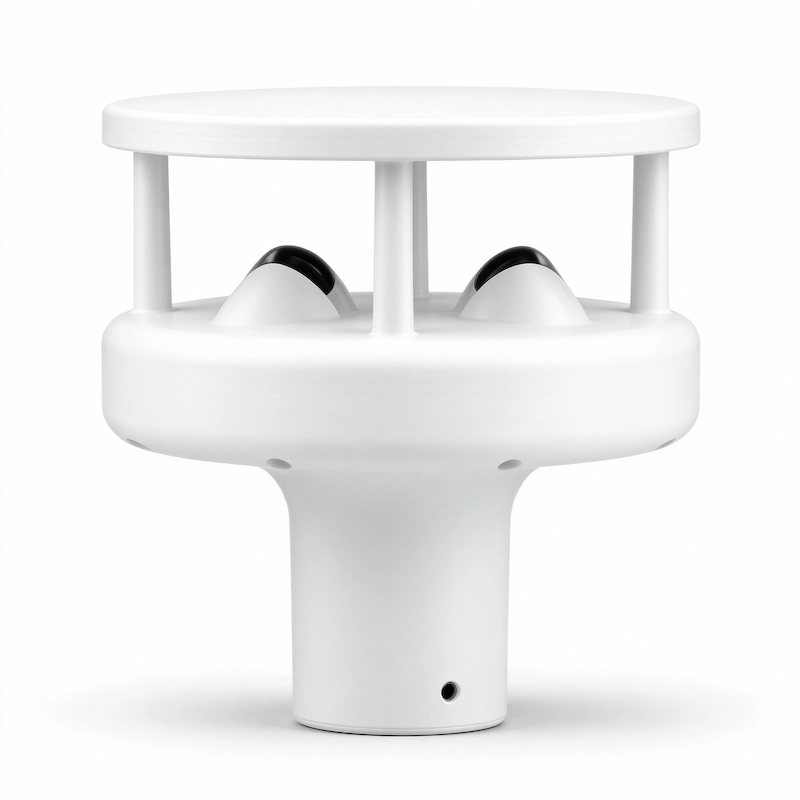
CC-M70 Ultrasonic Wind Sensor for Meteorological Monitoring
Our CC-M70 Ultrasonic Wind Sensor delivers reliable wind speed and wind direction readings without any rotating mechanical parts. Unlike traditional cup-and-vane anemometers that easily jam and wear out under harsh outdoor conditions, this ultrasonic wind sensor uses high-frequency sound waves to capture real-time wind data, offering excellent stability for long-term field deployment. It supports multiple signal output options and features an integrated heating module, making it ideal for weather stations, wind farm monitoring, environmental observation, and industrial safety alert systems.
| Specification Parameter | Technical Details |
|---|---|
| Model | CC-M70 Ultrasonic Wind Speed & Direction Sensor |
| Measured Variables | Wind Speed, Wind Direction |
| Wind Speed Range | 0 ~ 70 m/s |
| Wind Direction Range | 0 ~ 360° |
| Heating Function | Built-in internal heating system |
| Available Output | RS485 Modbus-RTU / 4-20mA / 0-5V / 0-10V |
| Power Supply | 12-24 VDC (Standard) | 3.3-5 VDC (Optional) |
| Housing Options | White ASA Shell (Standard) | Black ASA Shell (Optional) |
| Cable | Customizable cable length on request |
Key Advantages of the Ultrasonic Wind Sensor
The biggest benefit of this ultrasonic wind sensor is its maintenance-free solid-state design. With no spinning components, it greatly cuts routine maintenance work and lowers the risk of failure caused by sand, ice, dust, bird droppings or insect nests. The built-in heating system prevents frost and ice from covering the transducers in cold seasons, ensuring continuous valid measurement even in freezing environments. A variety of output protocols enable simple integration with data loggers, PLCs, edge gateways and automatic alarm systems. If you plan to build a complete weather monitoring station, you can match this unit with our other meteorological sensors to collect rainfall, air temperature, humidity and atmospheric pressure all together.
Common Application Scenarios
This heavy-duty ultrasonic wind sensor is widely used across many professional fields:
- Automatic Weather Stations: Continuously record wind data for agricultural meteorology, urban climate research and hydrological monitoring.
- Wind Power Industry: Track incoming wind flow to assist turbine control and risk protection.
- Bridges and Tall Structures: Detect strong crosswinds and trigger safety warnings for infrastructure.
- Ports and Offshore Sites: Provide wind information for vessel navigation and offshore operation safety.
- Highway and Railway Meteorology: Identify dangerous crosswind zones and support traffic safety alerts.
Installation, Lightning Protection and Matching Accessories
To get accurate measurement results, mount the ultrasonic wind sensor in an open space away from tall buildings, trees and large metal structures that can block airflow. We recommend using a dedicated vertical mounting pole; avoid thin poles that vibrate violently during strong gusts. For sites located in thunderstorm-prone regions, external lightning protection and surge protection devices are highly recommended to shield the sensor and data acquisition hardware from lightning surges. Keep the transducer surface clean; accumulated salt, dirt or ice will interfere with ultrasonic signals and reduce precision. If you activate the heating feature, please strictly follow the wiring guide to avoid overheating damage. Once properly installed, the sensor can run unattended for years with only occasional visual inspections. Regular visual inspection helps you catch salt deposition, insect nests or minor damage early, avoiding unexpected data interruption during critical monitoring periods.
Before placing your order, feel free to share details about your working environment, required signal type and installation height. Our technical support team can recommend the most suitable configuration and supporting accessories for your specific project.
Frequently Asked Questions
Will heavy rain affect readings of this ultrasonic wind sensor?
Light and moderate rainfall has very limited influence on measurement. For prolonged heavy downpours, correct installation height and proper shielding can further stabilise the output data.
Which output version should I pick?
RS485 Modbus-RTU works best for long-distance transmission and multi-sensor networks, while analog outputs like 4-20mA are easier to connect with traditional industrial controllers.
To learn more about globally recognised standards for meteorological wind observation, you may visit the official guidelines published by the World Meteorological Organization (WMO).
To download the full PDF datasheet, wiring diagram and installation manual, please send us your enquiry below.