
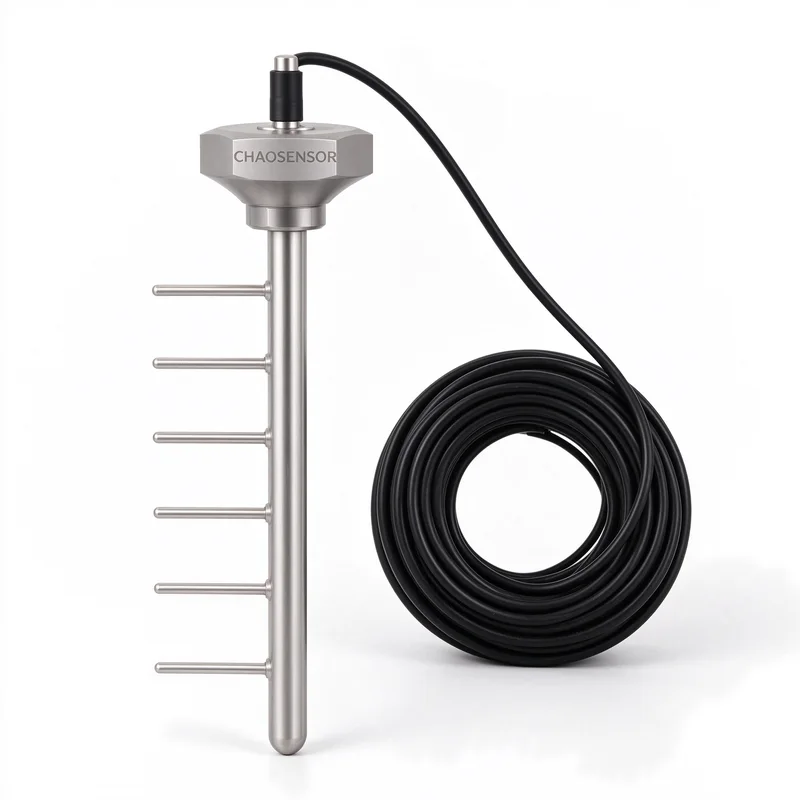
| Specification Parameter | Technical Details |
|---|---|
| Model / Series | CC-A30 Multi-Layer Soil Temperature Sensor (CC-A Series) |
| Measurement Principle | High-Precision PT100 Platinum Resistance Temperature Sensing |
| Soil Temperature Measurement & Performance Specifications | |
| Measurement Range | -50°C to +50°C |
| Measurement Accuracy | ±0.2°C (Full Range) |
| Resolution | 0.01°C |
| Measurement Layers & Spacing | Optional 5, 6, 7, 8, 9, or 10 Layers (60 mm interval between probes) |
| Sensing Element | PT100 |
| Electrical, Communication & Mechanical Configurations | |
| Output Signal & Interface | RS485 (Modbus-RTU) |
| Power Supply | 12 to 24 VDC |
| Ingress Protection | IP66 |
| Housing & Probe Material | Stainless Steel |
| Tailored OEM/ODM Capability | • Brand Customization: Custom silk-screen or laser-engraved logo branding available. • Packaging Options: Private-label custom protective packaging and calibration certificates. • Technical Adaptation: Customizable layer counts, probe spacing, and cable lengths. |
| Applications | Smart agriculture & precision irrigation, soil profile thermal monitoring, permafrost & alpine ecological research, forestry, and meteorological observation networks. |
Product Overview
The CHAOSENSOR CC‑A30 Multi‑Layer Soil Temperature Sensor is a profile‑type buried soil‑temperature probe for acquiring vertical multi‑depth soil‑temperature profile data. Equipped with multiple high‑precision thermistor sensing nodes arranged at predefined underground depths, this sensor synchronously measures soil temperature at different soil layers to reflect real‑world soil thermal‑stratification status. Fully encapsulated waterproof and anti‑corrosion probe body supports long‑term unattended underground burial. Standard RS485 Modbus‑RTU digital output enables easy integration with automatic weather stations, agricultural IoT gateways, hydrological data loggers and ecological research acquisition systems. Browse our complete environmental‑instrument portfolio on our meteorological sensors page.
Core Working Principle
CC‑A30 multi‑layer soil temperature sensor adopts high‑precision thermistor sensing technology. Multiple independent thermistor nodes are fixed at preset depths along the probe rod. After vertical burial into soil, each sensing node captures temperature values of its corresponding soil layer. The built‑in microcontroller processes multi‑point raw signals and outputs depth‑tagged temperature datasets over RS485 Modbus‑RTU bus. The whole probe uses anti‑corrosion waterproof resin encapsulation to resist erosion from soil moisture and soil chemical substances for multi‑year field deployment.
Key Features & Engineering Advantages
- Multi‑Depth Synchronous Profile Measurement: Single‑probe multi‑layer measurement, obtains vertical soil‑thermal distribution without deploying numerous discrete single‑point soil‑temperature sensors, reduces installation and wiring workload.
- High‑Precision Thermistor Sensing Nodes: Stable repeatable temperature‑reading performance, fits agrometeorological observation, freeze‑thaw cycle monitoring and climate‑related field research.
- Buried‑Grade Waterproof & Anti‑Corrosion Probe: Fully sealed anti‑corrosion encapsulation, adapts to long‑term underground complex‑soil‑environment deployment.
- Industrial‑Standard Digital Output: RS485 Modbus‑RTU interface, compatible with mainstream weather‑station data‑loggers, PLC and agricultural‑IoT acquisition hardware.
- Wide‑Voltage Power Input: 12‑24 VDC power‑supply, works well for solar‑power off‑grid remote observation sites and cabinet‑based meteorological‑station installations.
- Customizable Measuring Depths: Sensing‑node depths can be tailor‑made according to project requirements for crop root‑zone monitoring, frozen‑soil observation and soil‑profile‑research scenarios.
- Complete OEM / ODM Support: Custom silk‑screen or laser‑engraved logo marking, custom cable‑lengths, connector types, depth layouts and private‑label export‑packaging for tender‑grade bulk‑project orders.
Sensor Selection Guide: Multi‑Layer versus Single‑Point Soil‑Temperature Sensors
CHAOSENSOR supplies multiple soil‑monitoring sensors for different field‑monitoring objectives:
- CC‑A30 Multi‑Layer Soil Temperature Sensor: Integrated multi‑depth buried probe. Best choice for scenarios requiring soil‑thermal‑profile data: crop root‑zone research, frozen‑soil / freeze‑thaw monitoring, land‑surface energy‑balance study and agrometeorological‑network construction.
- Single‑point soil‑temperature sensor: Cost‑optimized solution for only one target soil‑depth; requires multiple individual sensors if multi‑layer data is needed, increasing field‑installation and cabling complexity.
- Multi‑parameter composite soil probe: Integrates temperature, volumetric water content, EC and other soil parameters; select when comprehensive multi‑factor soil monitoring is required.
Choose CC‑A30 for projects focusing on vertical soil‑thermal‑profile observation. Pair it with tipping‑bucket rain gauges, pyranometers and wind‑monitoring instruments from meteorological sensors page to build a complete agrometeorological automatic weather‑station.
Typical Industrial Applications
- Agrometeorological Observation Networks: Multi‑layer soil‑temperature monitoring for crop root‑zone thermal‑condition analysis, crop‑growth assessment and agricultural‑disaster early‑warning.
- Hydrology & Frozen‑Soil Research: Soil‑temperature‑profile monitoring for freeze‑thaw‑cycle observation, permafrost research and watershed‑hydrological study.
- Ecological & Climate‑Change Field Research: Long‑term soil‑thermal‑regime dataset collection for ecosystem‑research and land‑surface energy‑balance‑related field experiments.
- Precision Smart‑Agriculture: Supply soil‑temperature‑profile reference data supporting irrigation‑decision‑making and farm‑microclimate evaluation.
- Automatic Weather‑Station Retrofit: Add soil‑profile‑temperature observation function for regional unmanned synoptic‑meteorology monitoring networks.
Installation & Field‑Deployment Guidelines
- Vertical Borehole Burial: Drill vertical borehole matching probe outer‑diameter; insert probe vertically so that every sensing node sits accurately at its designed soil‑depth; backfill and compact surrounding soil to guarantee good thermal contact between probe and soil.
- Cable Protection: Reserve reasonable cable slack underground; avoid sharp pulling‑and‑stretching of signal cable; take anti‑rodent measures for field‑site cable routing.
- Power & Communication Wiring: Adopt 12‑24 VDC power‑supply; deploy shielded cable for RS485 Modbus‑RTU wiring to suppress electromagnetic‑field interference.
- Site‑Selection Principle: Keep away from artificial heat sources, building foundations and drainage ditches which would distort natural soil‑temperature profile.
- Routine Inspection: Periodically check cable integrity; prevent frost‑heave or soil‑displacement from shifting probe vertical position and generating depth‑offset error.
- Surge‑Protection Recommendation: Equip power‑and‑signal lines with lightning‑surge‑protection hardware for thunder‑prone outdoor locations to protect sensor and backend data‑acquisition equipment.
Frequently Asked Questions (FAQ)
1. What core advantage does CC‑A30 multi‑layer soil temperature sensor have compared with single‑point soil‑temperature sensors?
CC‑A30 integrates multiple depth‑arranged temperature‑sensing nodes inside one probe, outputs synchronous multi‑layer soil‑temperature‑profile data, and avoids complex installation and wiring work caused by deploying many discrete single‑point sensors.
2. What output‑interface does CC‑A30 adopt?
Standard RS485 Modbus‑RTU digital output, compatible with mainstream meteorological‑data‑loggers, agricultural‑IoT gateways and industrial‑control‑systems.
3. Can the measuring depths of CC‑A30 be custom‑configured?
Yes. The depth positions of each sensing node can be custom‑defined according to actual‑project needs for different crop‑root‑zone and soil‑profile‑research‑scenarios.
4. Is CC‑A30 suitable for long‑term permanent burial underground?
Yes. The probe uses anti‑corrosion fully‑waterproof encapsulation for multi‑year unattended underground‑burial deployment, but periodic cable‑integrity inspection is still recommended.
5. Are OEM / ODM custom‑services supported for CC‑A30?
Yes. Custom logo‑marking, custom‑measuring‑depths, cable‑lengths, connectors and private‑label‑packaging are available for bulk‑order and tender‑project‑requirements. You may combine it with other meteorological‑sensors found on our meteorological sensors page for complete agrometeorological‑observation‑station solutions.