
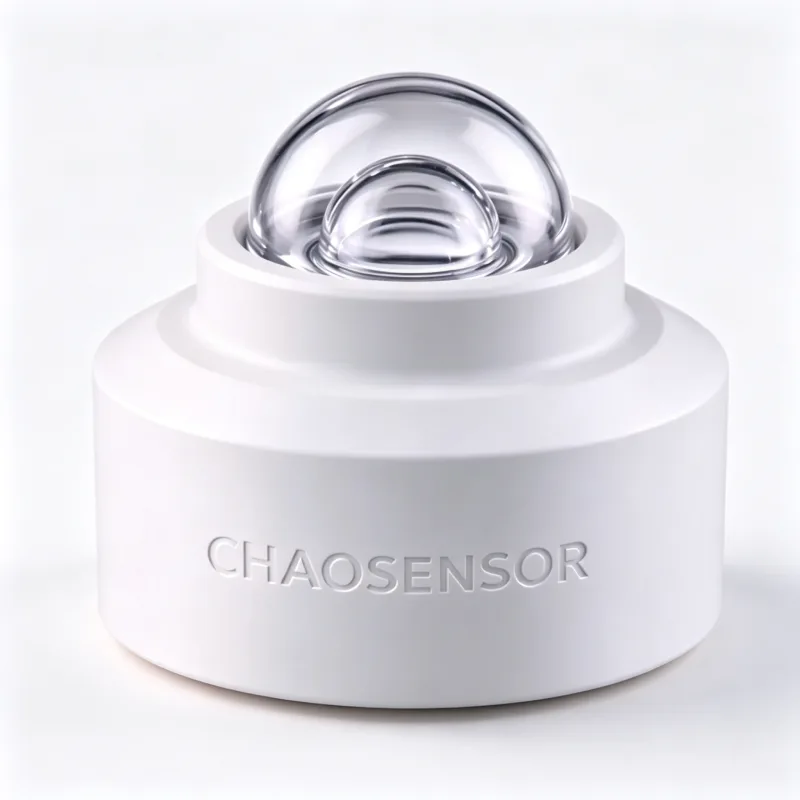
| Specification Parameter | Technical Details |
|---|---|
| Model / Series | CC-S19 Pyranometer / Solar Irradiance Sensor (CC-S Series) |
| ISO 9060 / WMO Classification | Class A (Spectrally Flat) |
| Measurement Principle | High-Precision Thermopile with Inorganic Carbon Coating & Double Optical Quartz Glass Domes |
| Radiometric & ISO 9060 Performance Specifications | |
| Measurement Range | 0 to 1100 W/m² |
| Spectral Range | 285 to 2800 nm (0.3 to 3 µm) |
| Nominal Sensitivity | 15 µV/(W/m²) (Individual calibration factor supplied on certificate) |
| Calibration Uncertainty | < 1.2% (k=2) |
| Response Time (95%) | < 5 s |
| Zero Offset (200 W/m² Net Thermal) | < 7 W/m² |
| Non-stability (Annual Drift) | ±0.5% per year |
| Non-linearity | ±0.2% |
| Directional Response | ±10 W/m² |
| Spectral Selectivity | < 3% |
| Temperature Response | < ±0.4% (-30°C to +50°C) |
| Tilt Response | < 0.5% |
| Integrated Temperature Sensor | PT100 or 10 kΩ Thermistor |
| Recalibration Interval | Recommended 2-year recalibration cycle |
| Electrical, Communication & Mechanical Configurations | |
| Output Signal & Interface | • Passive Analog: Raw mV output (approx. 0 to 16.5 mV at 1100 W/m², passive precision measurement) • Digital Interface: RS485 (Modbus-RTU) |
| Internal Resistance | < 50 Ω (Passive thermopile circuit) |
| Power Supply & Consumption | Passive (No power required for mV output) | 12 to 24 VDC (with heating enabled) Power Consumption: < 0.5 W (Standard) / 1.5 W (Heating enabled) |
| Operating Temperature & Humidity | -40°C to +80°C, 0% to 95% RH (Non-condensing) |
| Ingress Protection & Construction | IP65 | Double Cold-Worked Optical Quartz Domes | Integrated Bubble Level & Reusable Desiccant Cartridge |
| Dimensions & Weight | Diameter: Ø100 mm | Height: 85 mm | Weight: 450 g (0.45 kg) |
| Cable Length | 5 m standard cable (Customizable lengths available upon request) |
| Warranty | 1-Year Standard Manufacturer Warranty |
| Tailored OEM/ODM Capability | • Brand Customization: Custom silk-screen or laser-engraved logo branding available. • Packaging Options: Private-label custom protective packaging and calibration certificates. • Technical Adaptation: Customizable output scaling ranges, cable lengths, and heating/ventilation accessories. |
| Applications | Global, reflected (inverted mounting), and diffuse (with shadow ring) solar radiation measurement for meteorology, solar energy utilization, agriculture, building material aging, and atmospheric pollution monitoring. |
Product Overview
The CHAOSENSOR CC‑S19 Pyranometer (Solar Irradiance Sensor) is an ISO 9060:2018 Class‑A reference‑grade thermopile pyranometer built for high‑confidence global horizontal irradiance (GHI) observation. Compliant with WMO‑No. 8 meteorological requirements, this double‑quartz‑dome radiometer captures combined direct‑sun plus diffuse‑sky solar irradiance. Optimized for bankable utility‑PV performance audit, BSRN‑style reference monitoring, solar‑resource assessment and high‑grade meteorological observatories. It features premium black‑coated thermopile receiver, dual quartz domes, internal convection damper and user‑replaceable desiccant cartridge to suppress thermal‑offset drift and avoid internal condensation under coastal / high‑humidity conditions. For alternative solar‑radiation instruments, review our CHAOSENSOR CC‑S13 Class‑A Pyranometer and mid‑tier CHAOSENSOR CC‑S05 Thermopile Pyranometer.
Core Working Principle
CC‑S19 works on thermoelectric thermopile sensing principle. Incoming solar irradiance passes through double‑layer high‑transmittance quartz domes and is fully absorbed by the black‑coated thermopile receiver. Temperature difference between hot‑junction and cold‑junction generates millivolt output signal proportional to global horizontal irradiance. Dual‑dome mechanical design minimizes long‑wave infrared thermal offset error. Built‑in convection damper plus field‑replaceable desiccant stabilises internal cavity humidity, preventing dew and fogging of optical surfaces. On‑board signal conditioning converts raw thermopile signal into selectable RS485 Modbus‑RTU or analog outputs for data‑logger, SCADA and meteorological‑station integration.
Key Features & Engineering Advantages
- ISO 9060:2018 Class‑A Reference‑Grade Performance: Satisfies WMO‑No. 8 requirements, suitable for BSRN‑class reference stations, third‑party PV‑plant performance audit and high‑level solar‑resource evaluation.
- Dual High‑Quality Quartz‑Glass Dome: Optimised cosine‑response, azimuth‑response and low‑zenith‑angle performance; effectively reduces thermal‑offset measurement drift.
- Replaceable Desiccant Cartridge & Internal Convection Damper: Controls internal cavity humidity, avoids optical‑window condensation for long‑term unattended outdoor deployment in humid, coastal and tropical sites.
- Multiple Output Options: RS485 Modbus‑RTU digital output plus configurable analog signal formats, compatible with modern IoT gateways and legacy data‑acquisition hardware retrofits.
- Harsh‑Environment‑Resistant Housing: Robust outdoor construction, wide operating‑temperature range to adapt desert, alpine and offshore‑adjacent solar‑farm conditions.
- WRR‑Traceable Factory Calibration: Traceable calibration documentation supports bankable solar‑project audit and performance‑ratio validation workflows.
- Complete OEM / ODM Support: Custom cable lengths, laser‑engraved branding, private‑label packaging and adjusted output scaling for tender‑grade bulk‑project orders.
Sensor Selection Guide: CC‑S19 and CHAOSENSOR Pyranometer Portfolio
CHAOSENSOR supplies multi‑tier ISO 9060 thermopile pyranometer portfolio for different accuracy‑grade and budget‑driven solar‑monitoring projects:
- CC‑S19 Pyranometer: ISO 9060:2018 Class‑A reference‑grade. Target use‑cases: BSRN‑level reference monitoring, independent third‑party PV‑plant performance audit, high‑grade meteorological observatory and authoritative solar‑resource assessment.
- CC‑S13 Class‑A Pyranometer: Another Class‑A reference‑grade thermopile pyranometer, alternative choice for reference‑station and audit‑level solar‑monitoring.
- CC‑S05 Thermopile Pyranometer: Mid‑tier performance, balances cost and accuracy for regular utility‑PV routine monitoring without strict audit‑grade constraints.
- ISO 9060 Class‑C pyranometer: Cost‑optimized for distributed‑PV, agrometeorology and general‑purpose weather‑station routine logging.
Choose CC‑S19 when your project demands ISO 9060 Class‑A reference‑grade, audit‑ready GHI irradiance data. To construct a full PV‑monitoring station, pair it with back‑of‑module temperature sensor, soiling‑monitoring system or automatic sun‑tracker hardware.
Typical Industrial Applications
- Utility‑Scale PV Plant Audit‑Grade Monitoring: Delivers reference‑level GHI datasets for third‑party performance‑ratio verification, yield‑validation and bank‑required solar‑asset audit work.
- BSRN‑Style & Reference‑Grade Meteorological Stations: Deployed within high‑level solar‑radiation reference observation networks.
- Authoritative Solar‑Resource Assessment & Site Feasibility: Long‑term reference‑grade irradiance logging for green‑field large‑scale solar‑project bankable resource evaluation.
- Solar‑Energy‑Related Scientific Research: Supports field scientific experiments and climatology‑oriented solar‑radiation research tasks.
- High‑Standard Renewable‑Energy Observation Networks: Reference‑node instrument for national‑or‑regional‑level solar‑meteorology monitoring networks.
Installation & Maintenance Guidelines
- Perfect‑Horizontal Mount Requirement: CC‑S19 pyranometer must be mounted perfectly horizontal; any tilt angle will introduce systematic GHI measurement deviation.
- Unobstructed Sky‑View: Guarantee no poles, buildings or vegetation cast shadows over quartz domes across full daily solar‑trajectory.
- Cable & Power Wiring: Use shielded communication cable for RS485 Modbus‑RTU; strictly comply with wiring‑diagram power‑supply polarity.
- Scheduled Quartz‑Dome Cleaning: Wipe outer quartz‑dome surface gently by lint‑free soft micro‑fiber cloth. Dust, bird‑droppings and dirt attenuate incoming solar‑radiation and create negative‑biased readings.
- Desiccant Inspection & Replacement: Inspect and replace desiccant cartridge according to maintenance schedule to avoid internal condensation fogging optical domes.
- Surge‑Protection Recommendation: Fit external lightning surge‑protection hardware for thunder‑prone outdoor locations to protect pyranometer and backend data‑acquisition equipment.
Frequently Asked Questions (FAQ)
1. What does ISO 9060:2018 Class‑A reference‑grade mean for CC‑S19 pyranometer?
ISO 9060:2018 Class‑A represents reference‑grade performance. It delivers WRR‑traceable high‑confidence GHI measurement for BSRN‑class reference stations and third‑party PV‑plant audit‑grade monitoring scenarios. Compare with CC‑S13 Class‑A Pyranometer for alternative reference‑grade instrument selection.
2. Can CC‑S19 be used for bankable PV‑plant performance‑ratio audit?
Yes. Its ISO 9060 Class‑A reference‑grade performance plus WRR‑traceable factory calibration supports bankable solar‑asset performance‑verification workflows.
3. What signal‑output formats does CC‑S19 support?
It provides RS485 (Modbus‑RTU) digital output plus configurable analog outputs, compatible with mainstream meteorological data‑loggers, PLC and industrial‑IoT gateway devices.
4. Why is periodic desiccant replacement critical for long‑term pyranometer performance?
Desiccant controls humidity inside instrument cavity. Saturated desiccant causes inner‑dome condensation fogging and degrades measurement accuracy.
5. Is OEM / ODM customisation available for CC‑S19?
Yes. Custom cable‑length, laser‑engraved logo branding, private‑label packaging and adjusted output‑scaling can be realised for bulk‑order and tender‑project requirements.