
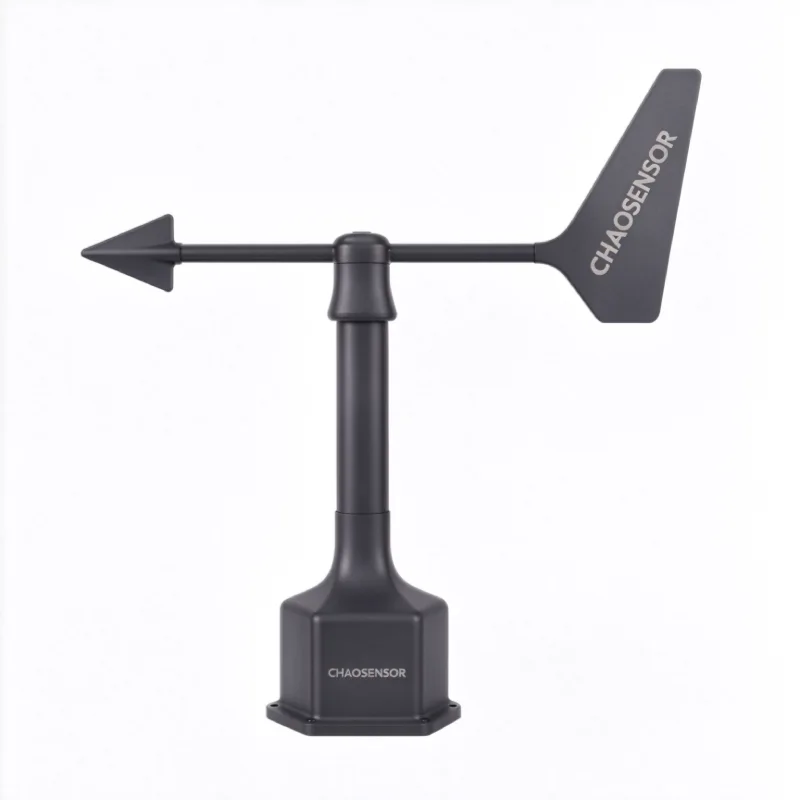
| Specification Parameter | Technical Details |
|---|---|
| Model / Series | CC-M50-D Wind Vane / Wind Direction Sensor (CC-M Series) |
| Measurement Principle | Non-Contact Magnetic Angle Sensing with Balanced Wind Vane |
| Wind Direction Measurement & Performance Specifications | |
| Measurement Range | 0 to 360° (at wind speeds of 0.5 to 65 m/s) |
| Starting Threshold | < 0.5 m/s |
| Maximum Permissible Error (Accuracy) | • RS485 Output: Better than ±2° • 0–5V Analog Output: Better than ±2° |
| Resolution | 0.1° (RS485 & 0–5V Analog Output) |
| Electrical, Communication & Mechanical Configurations | |
| Output Signal & Interface | • Digital Interface: RS485 (Modbus-RTU) • Analog Voltage Output: 0 to 5 VDC |
| Power Supply | 12 to 24 VDC |
| Operating Temperature | -60°C to +55°C |
| Housing & Vane Materials | • Main Body / Housing: Aluminum Alloy • Wind Vane: High-Strength Polycarbonate (PC) |
| Tailored OEM/ODM Capability | • Brand Customization: Custom silk-screen or laser-engraved logo branding available. • Packaging Options: Private-label custom protective packaging and calibration certificates. • Technical Adaptation: Customizable cable lengths, connector types, and output scaling. |
| Applications | Wind power generation, alpine and polar meteorological stations, marine & port monitoring, aviation weather systems, smart agriculture, and environmental monitoring networks. |
Product Overview
The CHAOSENSOR CC‑M50‑D Heated Wind Vane Direction Sensor belongs to CC‑M series meteorological wind‑monitoring instruments. It is a heated wind‑vane‑style wind‑direction sensor adopting opto‑electronic encoding principle, purpose‑built for reliable wind‑direction observation in extremely cold, frost‑prone and icy field environments. Integrated built‑in anti‑icing heater prevents frost and ice accumulation on the vane rotor assembly to avoid mechanical seizure, enabling stable continuous measurement down to ‑60 °C operating temperature. It supports opto‑isolated pulse output and RS485 Modbus‑RTU digital interface, compatible with meteorological data loggers, PLC, SCADA and industrial early‑warning systems. Deploy it together with CC‑M50‑S Heated 3‑Cup Anemometer to build a complete cold‑climate wind‑speed & wind‑direction observation station. Explore our full‑range wind‑monitoring portfolio on our wind speed and direction sensors page.
Core Working Principle
CC‑M50‑D heated wind vane direction sensor uses opto‑electronic encoding detection technology. Wind force pushes the high‑strength wind vane to rotate and align with incoming‑wind azimuth; internal opto‑electronic encoder captures vane‑rotation angle and converts it into standard wind‑direction angle value. The built‑in heating module suppresses frost‑ice buildup on moving mechanical components under freezing conditions, avoiding rotor lock‑up. Measurement results can be output via opto‑isolated pulse signal or RS485 Modbus‑RTU digital bus for integration with weather‑station acquisition and industrial control systems.
Key Features & Engineering Advantages
- Full‑Azimuth Wind‑Direction Measurement: Measuring range 0°‑360°, low starting‑wind threshold, high angular resolution and reliable azimuth accuracy for meteorological‑grade wind‑direction sampling.
- Integrated Anti‑Icing Heating System: Built‑in heater prevents frost and ice accumulation on vane assembly, solving mechanical‑seizure risk for alpine, polar and high‑altitude cold‑climate deployment.
- Dual‑Mode Signal Output: Opto‑isolated pulse output for legacy simple‑logger systems plus RS485 Modbus‑RTU digital interface for modern meteorological IoT networks.
- Extreme‑Wide Temperature Adaptability: Operating temperature: ‑60 °C ~ +55 °C; storage temperature: ‑60 °C ~ +70 °C, suitable for polar‑region, high‑mountain and cold‑coastal field‑station scenarios.
- Robust Mechanical Construction: Aluminum‑alloy main housing paired with high‑strength polycarbonate wind vane, delivering excellent corrosion‑resistance and mechanical stability for long‑term unattended outdoor operation.
- Universal Industrial‑Grade Power: 12‑24 VDC wide‑voltage power input, compatible with solar‑battery off‑grid power supply for remote observation sites.
- Complete OEM / ODM Customization: Custom silk‑screen or laser‑engraved logo branding, private‑label protective packaging and calibration certificates; customizable cable lengths, connector types and communication protocols for tender‑grade bulk‑project orders.
Sensor Selection Guide: Heated Wind‑Direction Sensor for Cold‑Climate Deployment
CHAOSENSOR provides multiple wind‑direction‑sensor options for different climate‑zone requirements:
- CC‑M50‑D Heated Wind Vane Direction Sensor: Opto‑electronic heated wind‑vane sensor. Designed for sites with frequent frost, snow and extreme low‑temperature down to ‑60 °C. Matches perfectly with CC‑M50‑S heated 3‑cup anemometer to form a full cold‑climate wind monitoring set.
- Non‑heated mechanical wind‑vane sensors: Cost‑optimized for temperate‑zone projects without icing risk, not fit for long‑term sub‑zero frost‑prone locations.
- Ultrasonic wind sensors: Moving‑part‑free solution for low‑maintenance‑priority sites; most standard ultrasonic models lack heavy‑duty anti‑icing capability for ‑60 °C extreme‑cold environments.
Choose CC‑M50‑D if your monitoring site faces persistent freezing‑cold conditions and you require ice‑resistant wind‑direction acquisition. Combine it with CC‑M50‑S heated anemometer and other meteorological instruments from wind speed and direction sensors page to assemble a complete cold‑climate automatic weather‑station.
Typical Industrial Applications
- Wind‑Power Generation: Cold‑climate on‑shore wind‑farm wind‑direction monitoring for turbine yaw control and wind‑resource assessment.
- Alpine & Polar Meteorological Stations: Long‑term unattended wind‑direction observation for high‑altitude mountain‑zone and polar‑region research networks.
- Marine & Port Monitoring: Cold‑coastal and northern‑harbour wind‑direction monitoring for vessel‑navigation safety and harbour weather‑alert workflows.
- Aviation Weather Systems: Cold‑frost‑prone airport wind‑direction monitoring supporting runway‑safety early‑warning systems.
- Smart Agriculture: Cold‑region farm wind‑azimuth monitoring for crop‑protection and frost‑risk‑evaluation.
- Industrial‑Safety Wind Alarms: Wind‑direction early‑warning for tower‑cranes and large outdoor industrial facilities in freezing‑zone environments.
Installation & Field‑Deployment Guidelines
- Mounting‑Location: Install on open obstruction‑free meteorological mast; keep away from buildings, trees and towers which generate airflow‑distortion and wind‑shadow effect.
- Mount‑Orientation: Correctly perform north‑reference alignment during installation to guarantee true‑geographic wind‑direction output; keep sensor upright for free vane rotation.
- Power & Wiring: Use 12‑24 VDC power‑supply; deploy shielded cable for RS485 Modbus‑RTU communication to reduce electromagnetic‑field interference.
- Heater‑Operation Note: Built‑in heater activates under cold‑condition to melt frost and ice; ensure sufficient power‑supply margin when heating runs continuously.
- Routine‑Inspection & Maintenance: Periodically inspect wind‑vane assembly; clear accumulated snow, ice‑fragments and debris; avoid scratching polycarbonate vane surfaces which may degrade rotation‑sensitivity.
- Surge‑Protection Recommendation: Fit lightning surge‑protection hardware for power‑supply and communication‑lines at thunder‑prone outdoor‑locations to protect sensor and backend data‑acquisition equipment.
Frequently Asked Questions (FAQ)
1. What is the operating‑temperature range for CC‑M50‑D heated wind vane direction sensor?
Operating temperature ranges from ‑60 °C to +55 °C; storage temperature is ‑60 °C ~ +70 °C. Integrated heater prevents frost‑ice accumulation for extreme‑cold‑site deployment.
2. What output‑signals does CC‑M50‑D support?
Dual‑output options: opto‑isolated pulse output and RS485 Modbus‑RTU digital interface, compatible with mainstream meteorological‑data‑loggers and industrial‑control‑hardware.
3. Can CC‑M50‑D work together with CC‑M50‑S heated 3‑cup anemometer?
Yes. CC‑M50‑D and CC‑M50‑S are matching set within CC‑M series, jointly delivering complete wind‑speed plus wind‑direction measurement for cold‑climate weather‑stations, you can find more related sensors on our wind speed and direction sensors page.
4. What materials are used for housing and wind‑vane?
Main‑body housing adopts aluminum‑alloy material; wind‑vane uses high‑strength polycarbonate (PC) for outdoor weather‑resistance performance.
5. Are OEM / ODM custom‑services available for CC‑M50‑D?
Yes. Custom logo‑marking, private‑label packaging & calibration certificates, custom‑cable‑lengths, connectors and communication‑protocol‑adaptation are supported for bulk‑order and tender‑project‑requirements.