
| Specification Parameter | Technical Details |
|---|---|
| Model / Series | CC-M-LPM Laser Precipitation Monitor (Optical Disdrometer) |
| Key Measurements Matrix | Precipitation Type (Drizzle, Rain, Sleet, Snow, Hail), Particle Size & Velocity Spectrum, Rainfall Intensity, Precipitation Visibility, Radar Reflectivity |
| Optical Sensor & Particle Spectrum Matrix | |
| Optical Sensor | Laser Diode | Wavelength: 660 nm | Output Power: 0.5 mW | Laser Class: Class 1 |
| Particle Size Range | Liquid: 0.2 – 5 mm | Solid: 0.2 – 25 mm |
| Particle Velocity Range | 0.2 – 20 m/s |
| Particle Classification | 32 diameter classes × 32 velocity classes |
| Precipitation & Meteorological Output Matrix | |
| Detectable Precipitation Types | Drizzle, Rain, Sleet, Snow, Hail |
| Rainfall Intensity Range | 0.001 – 1200 mm/h | Accuracy: ±5% (Liquid), ±20% (Solid) |
| Precipitation Visibility Range | 100 – 5000 m | Accuracy: ±10% |
| Radar Reflectivity | 9.9 – 99 dBz | Accuracy: ±20% |
| Weather Code Output | WMO 4680 / 4677 (SYNOP), 4678 (METAR), and NWS Code Tables |
| Measurement Interval | 10 s – 60 min (Configurable) |
| System & Hardware Configurations | |
| Output Signal Configuration | RS485 (Modbus-RTU / ASCII) serial interface |
| Power Supply Voltage | 12 / 24 VDC |
| Operating Environment | Temperature: -40°C to +50°C | Humidity: 0 – 100% RH |
| Cable Length | Fully customizable configurations available upon request (Optional) |
| Tailored OEM/ODM Capability | • Brand Customization: Custom silk-screen or laser-engraved logo branding available. • Packaging Options: Private-label custom colored packaging designs. • Technical Adaptation: Fully customizable communication protocols, heating options, and output signal configurations. |
| Applications | Automatic Weather Stations (AWS), meteorological networks, hydrological monitoring, flood early warning, smart highway & aviation weather systems, and scientific atmospheric research. |
Product Overview
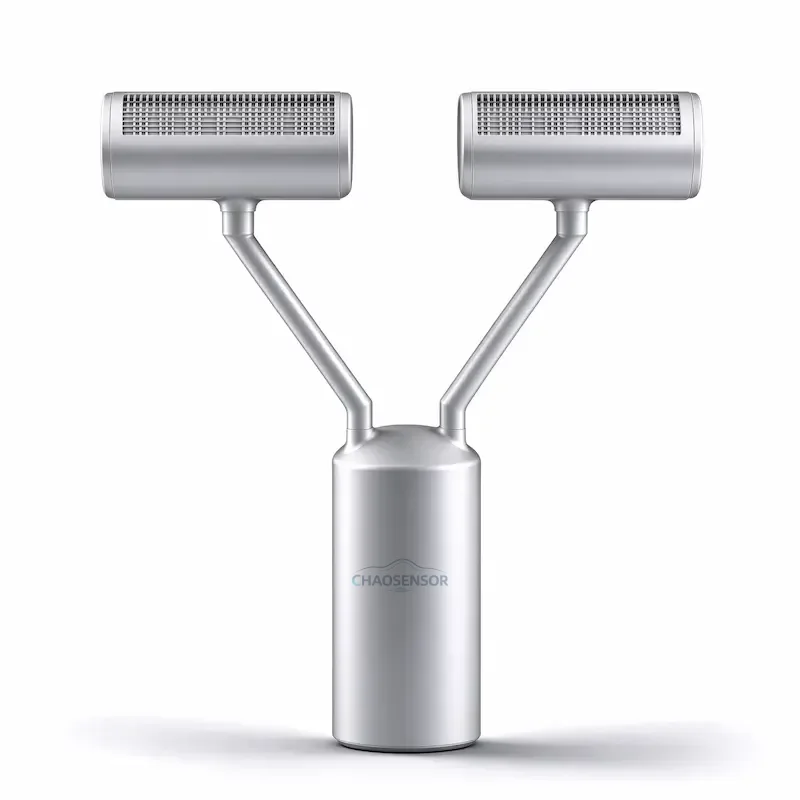
The CC-M-LPM Laser Precipitation Monitor is a high-precision optical disdrometer and present weather sensor engineered for automated, unattended meteorological and hydrological observation. Utilizing an advanced laser beam attenuation principle, this laser rain snow hail sensor simultaneously measures the diameter and falling velocity of hydrometeors across 32 diameter classes and 32 velocity classes. It delivers real-time Drop Size Distribution (DSD), rainfall intensity, precipitation visibility, and radar reflectivity data for mission-critical weather monitoring networks.
Key Features & Engineering Advantages
- High-Precision Particle Spectrum Analysis: Accurately detects liquid droplets from 0.2 to 5 mm and solid precipitation particles from 0.2 to 25 mm at falling velocities ranging from 0.2 to 20 m/s.
- Automated WMO Weather Code Classification: Distinguishes between drizzle, rain, sleet, snow, and hail, directly outputting standardized WMO 4680/4677 (SYNOP), 4678 (METAR), and NWS weather code tables.
- Anti-Splash Dual-Arm Architecture: Equipped with perforated metallic splash shields that suppress stray ambient light interference and prevent water droplets from splashing onto the optical windows.
- Maintenance-Free All-Weather Reliability: Operates with zero moving mechanical parts, eliminating the clogging, evaporation, and freezing errors common in traditional tipping-bucket rain gauges across temperatures from -40°C to +50°C.
- Seamless Industrial Integration: Features a rugged RS485 digital interface supporting Modbus-RTU and ASCII protocols on a standard 12 / 24 VDC power supply for effortless integration with Automatic Weather Stations (AWS) and IoT data loggers.
Working Principle: How Optical Laser Attenuation Works
The CC-M-LPM Optical Disdrometer operates on the proven optical light-sheet attenuation principle. The transmitter head houses a Class 1, 660 nm (0.5 mW) laser diode that projects a uniform horizontal light beam toward the receiver unit across the sampling zone.
When precipitation particles—such as raindrops, snowflakes, or hailstones—pass through the laser light sheet, they partially block the beam and cause a measurable drop in optical signal intensity:
- Particle Diameter Calculation: The amplitude of the signal attenuation directly corresponds to the cross-sectional size of the falling particle.
- Fall Velocity Calculation: The duration of the signal interruption determines the exact falling speed of the particle through the light beam.
- Weather Type Identification: By cross-referencing particle size against fall velocity within a 32 × 32 classification matrix, the onboard processor accurately identifies the exact precipitation type, calculates rainfall intensity (0.001 to 1200 mm/h), and derives meteorological visibility and radar reflectivity (dBz).
Laser vs. Radar Precipitation Sensor: Selection Guide
Choosing between an optical laser disdrometer and a Doppler radar rain gauge depends on your project’s data granularity, installation footprint, and budget requirements. The comparison below highlights how the CC-M-LPM compares with our compact CHAOSENSOR CC-M17 Radar Precipitation Sensor:
| Selection Criteria | CC-M-LPM Laser Precipitation Monitor | CC-M17 Radar Precipitation Sensor |
|---|---|---|
| Measurement Technology | Optical Laser Beam Attenuation (660 nm) | 24 GHz Doppler Microwave Radar |
| Target Applications | National meteorological bureaus, aviation, hydrology, scientific research | Smart cities, compact weather stations, agriculture, IoT networks |
| Precipitation Classification | 5 Types (Drizzle, Rain, Sleet, Snow, Hail) + WMO / SYNOP / METAR Codes | Rain, Snow, Hail & No-Precipitation Status |
| Rainfall Intensity Range | 0.001 – 1200 mm/h (Ultra-light drizzle to extreme downpours) | 0.01 – 200 mm/h (Standard to heavy rainfall) |
| Liquid Rain Accuracy | ±5% | ±10% |
| Advanced Spectrum Data | Yes (32×32 Drop Size & Velocity Matrix, Visibility, Radar dBz) | No (Outputs rainfall intensity, accumulation, and precipitation type) |
| Form Factor & Maintenance | Dual-arm optical structure; periodic lens cleaning in dusty/icy sites | Ultra-compact (φ105 × 178 mm) sealed housing; virtually zero maintenance |
Choose the CC-M-LPM if your project requires WMO weather code reporting, Drop Size Distribution (DSD) research data, ultra-low drizzle sensitivity (0.001 mm/h), or ±5% high-precision accuracy.
Choose the CHAOSENSOR CC-M17 Radar Precipitation Sensor if you need a compact, cost-effective, fully enclosed sensor for multi-element weather stations or dusty environments where optical lenses cannot be easily cleaned.
Typical Applications
- Meteorological Networks & Automatic Weather Stations (AWS): Provides automated present weather reporting, SYNOP/METAR code generation, and microphysical precipitation research data for national and regional weather bureaus.
- Hydrology & Flood Early Warning Systems: Delivers high-resolution rainfall intensity and accumulation telemetry for river basins, reservoirs, dams, and urban drainage monitoring.
- Smart Transportation, Highways & Aviation: Monitors hazardous road and runway weather conditions—including heavy rain, sleet, snow, and hail—while providing real-time precipitation visibility (100 to 5000 m) to traffic management and airport control centers.
- Precision Agriculture & Environmental Monitoring: Tracks localized precipitation patterns and hail events to support crop protection, irrigation scheduling, and ecological watershed studies.
Frequently Asked Questions (FAQ)
1. What is the difference between a Laser Precipitation Monitor and a traditional tipping-bucket rain gauge?
Unlike a mechanical tipping-bucket rain gauge that only measures liquid rainfall volume and suffers from clogging, wind undercatch, and freezing in winter, the CC-M-LPM Laser Precipitation Monitor uses non-contact optical sensing. It has no moving parts, requires virtually no maintenance, and can detect solid precipitation (snow, sleet, hail) as well as drizzle at rates as low as 0.001 mm/h.
2. Should I choose the CC-M-LPM Laser Sensor or the CC-M17 Radar Sensor?
If your application demands high-precision rainfall measurements (±5%), WMO weather code outputs, and 32×32 particle size/velocity spectra for meteorological or hydrological research, the CC-M-LPM is the ideal solution. If you prefer a smaller, fully sealed housing without exposed optical windows for smart city or agricultural IoT nodes, consider our CHAOSENSOR CC-M17 Radar Precipitation Sensor.
3. Which precipitation types and weather codes can the CC-M-LPM output?
The sensor automatically classifies five primary precipitation types: drizzle, rain, sleet, snow, and hail. It outputs standardized international weather codes including WMO 4680 / 4677 (SYNOP), 4678 (METAR), and NWS code tables, alongside raw 32 × 32 particle size and velocity spectrum data.
4. How does the sensor connect to existing data loggers or SCADA systems?
The CC-M-LPM is equipped with an industrial RS485 serial interface supporting both Modbus-RTU and ASCII communication protocols, allowing direct plug-and-play integration with PLCs, RTUs, Automatic Weather Stations, and cloud telemetry gateways.
5. Can the CC-M-LPM operate in freezing winter environments?
Yes. The sensor is engineered to operate across an ambient temperature range of -40°C to +50°C and 0–100% RH humidity. It runs on a standard 12 / 24 VDC power supply and supports integrated optical window heating options to prevent snow or ice accumulation in sub-zero climates.
6. Do you offer OEM/ODM customization for bulk or project orders?
Yes. We provide full OEM/ODM services including custom silk-screen or laser-engraved branding, private-label packaging, customized cable lengths, and tailored communication protocols or output configurations to match your project requirements.